The plant known in Japanese as kuzu goes by many names depending on its location globally: East Asian arrowroot, Japanese arrowroot, Chinese arrowroot, and more generally, kudzu.

Learn From the Best
What Is Kuzu?
Kuzu (Pueraria montana var. lobata) is the Japanese name for the kudzu plant and the starch derived from the kudzu root. Kuzu is native to both China and Japan and is a member of the pea family. Though the vine itself is quite invasive and survives by covering other plants and thus robbing them of a light source, the starch contained in its large roots is valued throughout parts of Asia for its culinary and medicinal properties.
What Are the Benefits of Kuzu?
One of the primary benefits of kuzu root lies in its naturally high levels of flavonoids, which is a compound found in many fruits and vegetables full of antioxidants. Consuming the nutrient dense kuzu plant has a number of health benefits including potentially reducing cold and flu symptoms and aiding in indigestion.
How to Cook With Kuzu
Once processed into a soft white starch, you can incorporate kuzu into teas (kuzuyu) or mixed with warm water into a simple porridge. To use kuzu starch, hydrate the powder in cold water or an otherwise cold liquid before adding to stir-fries, Japanese curry, or desserts. Here are a few other ways to cook with the popular thickener:
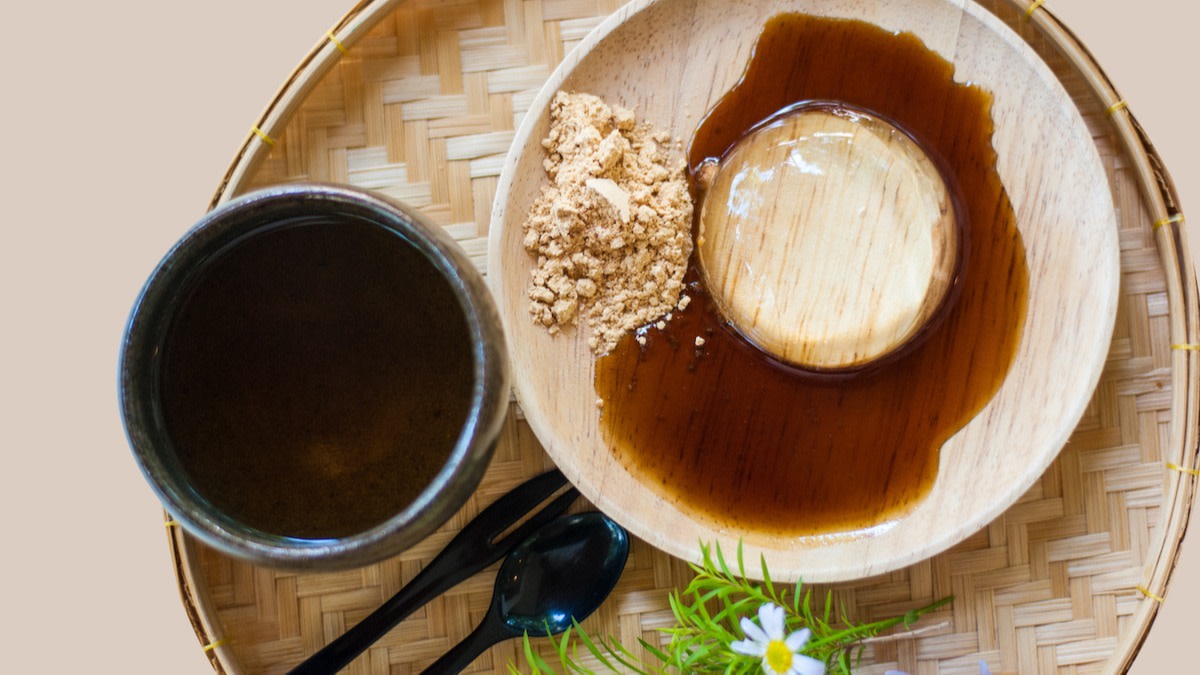
- Add to sweets. Kuzu is an ingredient in many traditional Japanese sweets, including kuzumochi, a type of jellied cake similar to ones made from glutinous rice flour, and kuzukiri, a boiled kudzu powder presentation cut into thin, jellied strips eaten with a dark, sweet syrup called kuromitsu. You can serve kuzu with sweet red beans in kuzu-dama, a red bean cake coated with kuzu powder. Manjū, a red bean paste, is topped with a jellied layer of kuzu.
- As a starch substitute. Kuzu and kudzu starch are primarily used as a gluten-free thickening agent, lending a velvety smooth texture similar to rice flour, cornstarch, or potato starch. You can use kuzu in place of potato starch in ankake, an unctuous sauce served with stir-fries or roasted vegetables.
- In savory dishes. Kuzu is also the star of savory dishes like goma dofu, a kuzu pudding with the consistency and appearance of tofu, typically served with black sesame paste.
Want to Learn More About Cooking?
Become a better chef with the MasterClass Annual Membership. Gain access to exclusive video lessons taught by the world’s best, including Niki Nakayama, Gabriela Cámara, Chef Thomas Keller, Yotam Ottolenghi, Dominique Ansel, Gordon Ramsay, Alice Waters, and more.


Food
Wine 101: What Is Barrel Aging? Understanding the Barrel Aging Process in Winemaking and the Difference Between Steel and Oak Barrels
Sep 2, 2022

Food
Simple Syrup Recipe: How to Make Simple Syrup for Cocktails
Sep 6, 2026
Food
Almond Meal vs. Almond Flour: What’s the Difference?
Sep 7, 2021

Food
What Is DOC and DOCG Wine? Differences Between DOC, DOCG, IGT, and VdT on Italian Wine Labels
Aug 10, 2021
Food
How to Cut Shiitake Mushrooms
Mar 25, 2022
Food
How to Sharpen a Serrated Knife: Method and Tips
Jan 4, 2022
Other articles
Claude Debussy: A Guide to Claude Debussy’s Life and Music
Jun 25, 2021
How to Play Basketball: Explore the Basics of Basketball
Jun 7, 2021
How to Write a Horror Story in 7 Steps
Dec 8, 2021
Daniel Pink’s ABC’s of Selling: Inside the 3 Key Sales Qualities
Dec 10, 2021
Heavy Metal Music Guide: A Dive Into Heavy Metal Music
Jul 15, 2021
Learn the Difference Between Phrases and Clauses
Aug 11, 2021