Explore the 4 Types of Tennis Courts, From Clay to Synthetic
Written by MasterClass
Last updated: Jun 7, 2021 • 3 min read
Tennis courts come in a variety of surfaces that can be beneficial to your game, depending on your playing style. While you can play tennis on practically any surface, once you figure out your tennis-playing style, you can discern which type of surface best suits your game and use it to your advantage in your next tennis match.

Learn From the Best
4 Types of Tennis Courts
There are a few main types of tennis court surfaces, such as:
- 1. Hard tennis courts. Hard courts are one of the main types of courts commonly found at parks, recreation centers, clubs, and schools. Composed of varying mixtures of asphalt and concrete, hard courts also contain an acrylic surface layer (like paint or coating) to seal the surface and provide a level of cushioning. Hard surface courts have lower energy absorption than clay courts, making the tennis ball bounce higher and move faster. Hard courts are an all-around court, which makes them ideal for most types of tennis players. The US Open and the Australian Open are the only two Grand Slam tournaments that use a hard court surface.
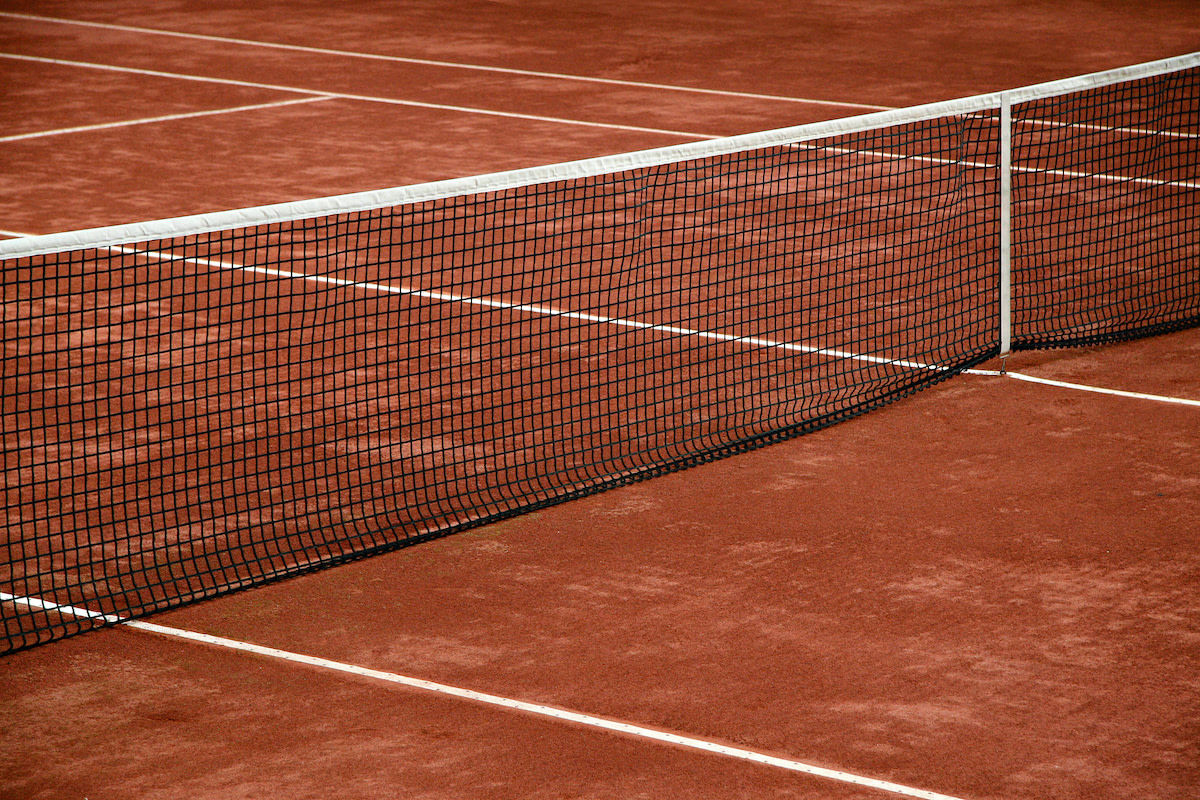
- 2. Clay tennis courts. Clay courts mainly come in two different forms: The red clay court is a coarse mixture made from brick, and the green clay court, which is a crushed metabasalt, also known as Har-Tru. These materials dry much quicker than standard clay, which is rarely found on modern tennis court surfaces. Due to their textured surfaces, clay courts feature the slowest surface for ball speed. High-bounce serves like topspin are easier to return on this surface due to the ball’s reduced speed. This reduced speed makes points last longer, which is ideal for baseline players who have a more defensive style of play. Clay courts are slightly easier on the human body, as the surface absorbs more shock, and also allows players to slide into place rather than coming to a complete stop, conserving some of their energy. The French Open is the only Grand Slam that uses a clay court. Professionals Roger Federer and Rafael Nadal are considered two of the best players on clay courts to date.
- 3. Grass tennis courts. Grass courts, also known as lawn courts, used to be the most common type of tennis court surface. However, due to their high cost and maintenance, grass courts are less commonly used than hard courts and clay courts. A grass surface consists of short-cut grass on tightly packed soil, and is the fastest type of court, offering low ball bounces and shorter rallies. This fast surface also provides an advantage to players with big serves, as the ball is harder to return to start the point. There are many variables to how a ball behaves on a grass court, such as how many players have played on it before, how often it is mowed, and the overall health and quality of the grass itself. While all four of the Grand Slam tournaments once used grass courts, Wimbledon is currently the only one that still features a grass court.
- 4. Synthetic tennis courts. For the softness and feel of a grass court without the maintenance, some public and private facilities may opt for a synthetic turf court. Synthetic courts usually contain plastic grass fibers with better durability and less upkeep than a standard grass court. The sand-filled topping that layers the surface of a synthetic turf court protects the court itself from weather conditions, allowing it to dry faster, and making it less susceptible to wear over time. The materials used are non-toxic and not prone to pests like real grass.
Learn More
Want to become a better athlete? The MasterClass Annual Membership provides exclusive video lessons from master athletes, including Serena Williams, Stephen Curry, Tony Hawk, Misty Copeland, and more.


Sports & Gaming
How to Play Basketball: Explore the Basics of Basketball
Jun 7, 2021

Sports & Gaming
Explore Will Wright’s Life and Top Video Game Designs
Aug 10, 2021

Sports & Gaming
How to Swim the Front Crawl Stroke: 5 Freestyle Swimming Tips
Sep 22, 2021

Sports & Gaming
How to Build a Quad Anchor System for Rock Climbing
Oct 15, 2021

Sports & Gaming
Pack Line Defense: How to Execute a Pack Line Defense
Nov 29, 2021

Sports & Gaming
Prusik Knot Guide: How to Tie a Prusik Knot for Rock Climbing
Jan 29, 2022
Other articles
Claude Debussy: A Guide to Claude Debussy’s Life and Music
Jun 25, 2021
How to Write a Horror Story in 7 Steps
Dec 8, 2021
Daniel Pink’s ABC’s of Selling: Inside the 3 Key Sales Qualities
Dec 10, 2021
Wine 101: What Is Barrel Aging? Understanding the Barrel Aging Process in Winemaking and the Difference Between Steel and Oak Barrels
Sep 2, 2022
Heavy Metal Music Guide: A Dive Into Heavy Metal Music
Jul 15, 2021
Learn the Difference Between Phrases and Clauses
Aug 11, 2021