What’s the Difference Between Macarons and Macaroons?
Written by MasterClass
Last updated: Aug 25, 2021 • 2 min read
Macarons and macaroons—their names are almost the same, but these confections, which share a common ancestor, have evolved into two completely different cookies.

Learn From the Best
Macaron vs. Macaroons: What’s the Difference?
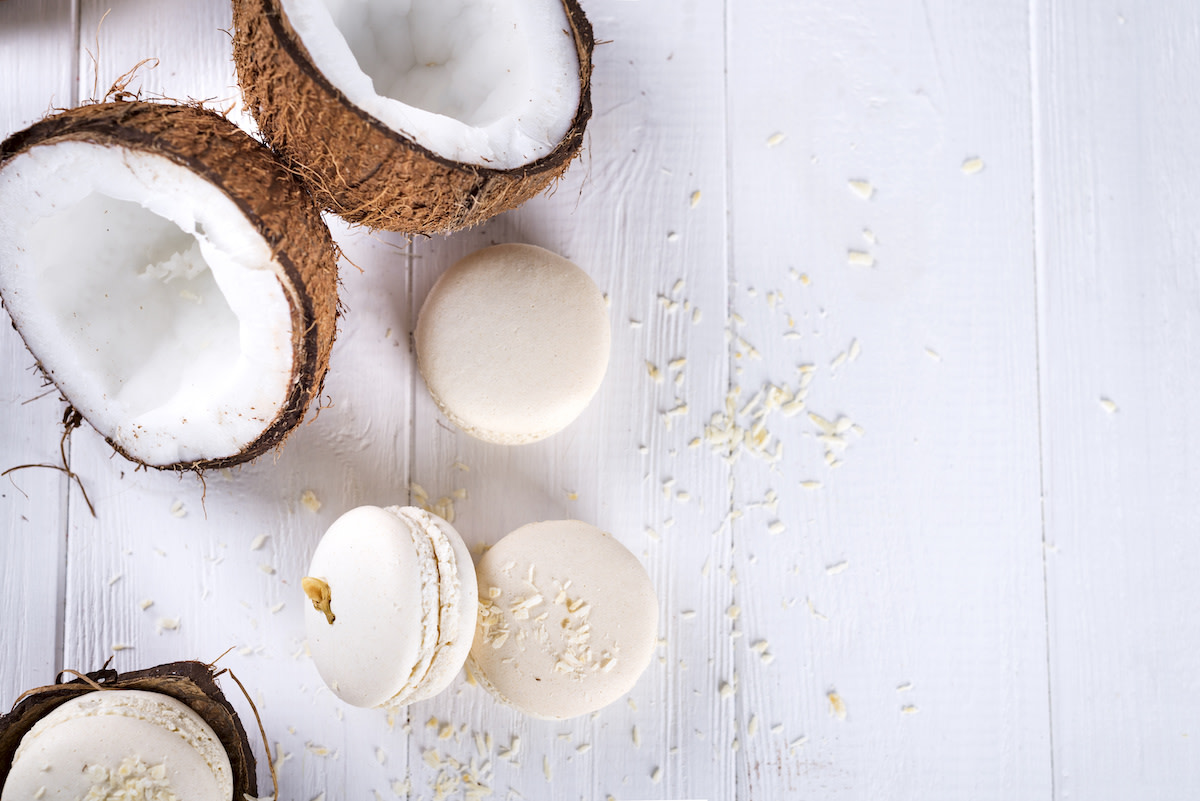
Macarons and macaroons differ in their main ingredient, which for macarons is almond meal, and macaroons is shredded coconut.
Parisian macarons are made from a batter of ground almond flour, egg whites, and confectioners' sugar that puffs up to form a smooth-surfaced cookie with a hollow center and distinctive “foot.” These airy almond meringues are then formed into sandwich cookies filled with ganache, jam, or buttercream and chilled, yielding a chewy center and shell-like surface. Macarons are available in countless flavors and colors.
Coconut macaroons are made from shredded coconut held together by egg whites and granulated sugar. They have a craggy surface and chewy interior and are often dipped in chocolate.
Are Macarons and Macaroons Related?
Both macarons and macaroons are descendants of the OG macaroon, an Italian cookie made from chopped almonds, egg whites, and sugar. Made without flour, both versions are gluten free and unleavened.
Where do Macarons and Macaroons Come From?
The first almond-meringue cookies likely originated in southern Italy, where almonds were introduced by the Arabs in the eighth century. Almond macaroons became especially popular in Italian-Jewish cookery, since the unleavened cookies could be eaten for Passover. Almond macaroons probably made their way to France around the 16th century, possibly introduced by Catherine de Medici, or travelling nuns. When dried coconut became widely available in the U.S. and Europe in the 19th century, bakers discovered they could swap the almonds for coconut to make a sturdier cookie with a longer shelf life. The world’s most famous almond-meringue cookie, the Parisian macaron, wasn’t developed until the 20th century, when it became a fixture at high-end patisseries such as Ladurée.
Why Are People Always Confusing the Two?
The English word macaroon actually comes from the French macaron, which in turn is a translation of the Italian word maccarone. Coconut dominated the macaroon scene in the United States for so long that it didn’t really matter that these two cookies have such similar names—until about a decade ago, when the Parisian macaron exploded in popularity. Now, it’s easy to confuse the two, with some American bakers translating the almond sandwich cookie into English and others sticking with the original French spelling. The same problem doesn’t come up in France, where coconut macaroons are known by an entirely different name: rochers coco.
Learn more about the fundamentals of French pastry making with Chef Dominique Ansel here.

Food
Wine 101: What Is Barrel Aging? Understanding the Barrel Aging Process in Winemaking and the Difference Between Steel and Oak Barrels
Sep 2, 2022

Food
Simple Syrup Recipe: How to Make Simple Syrup for Cocktails
Sep 6, 2026
Food
Almond Meal vs. Almond Flour: What’s the Difference?
Sep 7, 2021

Food
What Is DOC and DOCG Wine? Differences Between DOC, DOCG, IGT, and VdT on Italian Wine Labels
Aug 10, 2021
Food
How to Cut Shiitake Mushrooms
Mar 25, 2022
Food
How to Sharpen a Serrated Knife: Method and Tips
Jan 4, 2022
Other articles
Claude Debussy: A Guide to Claude Debussy’s Life and Music
Jun 25, 2021
How to Play Basketball: Explore the Basics of Basketball
Jun 7, 2021
How to Write a Horror Story in 7 Steps
Dec 8, 2021
Daniel Pink’s ABC’s of Selling: Inside the 3 Key Sales Qualities
Dec 10, 2021
Heavy Metal Music Guide: A Dive Into Heavy Metal Music
Jul 15, 2021
Learn the Difference Between Phrases and Clauses
Aug 11, 2021