Mark Rothko: A Guide to Mark Rothko’s Life and Artworks
Written by MasterClass
Last updated: Jun 7, 2021 • 5 min read
Abstract Expressionism is an artistic movement that uses shapes and colors to evoke specific emotions from the viewer. Painters in the school included Jackson Pollock, Piet Mondrian, Willem de Kooning, and Mark Rothko.

Learn From the Best
Who Was Mark Rothko?
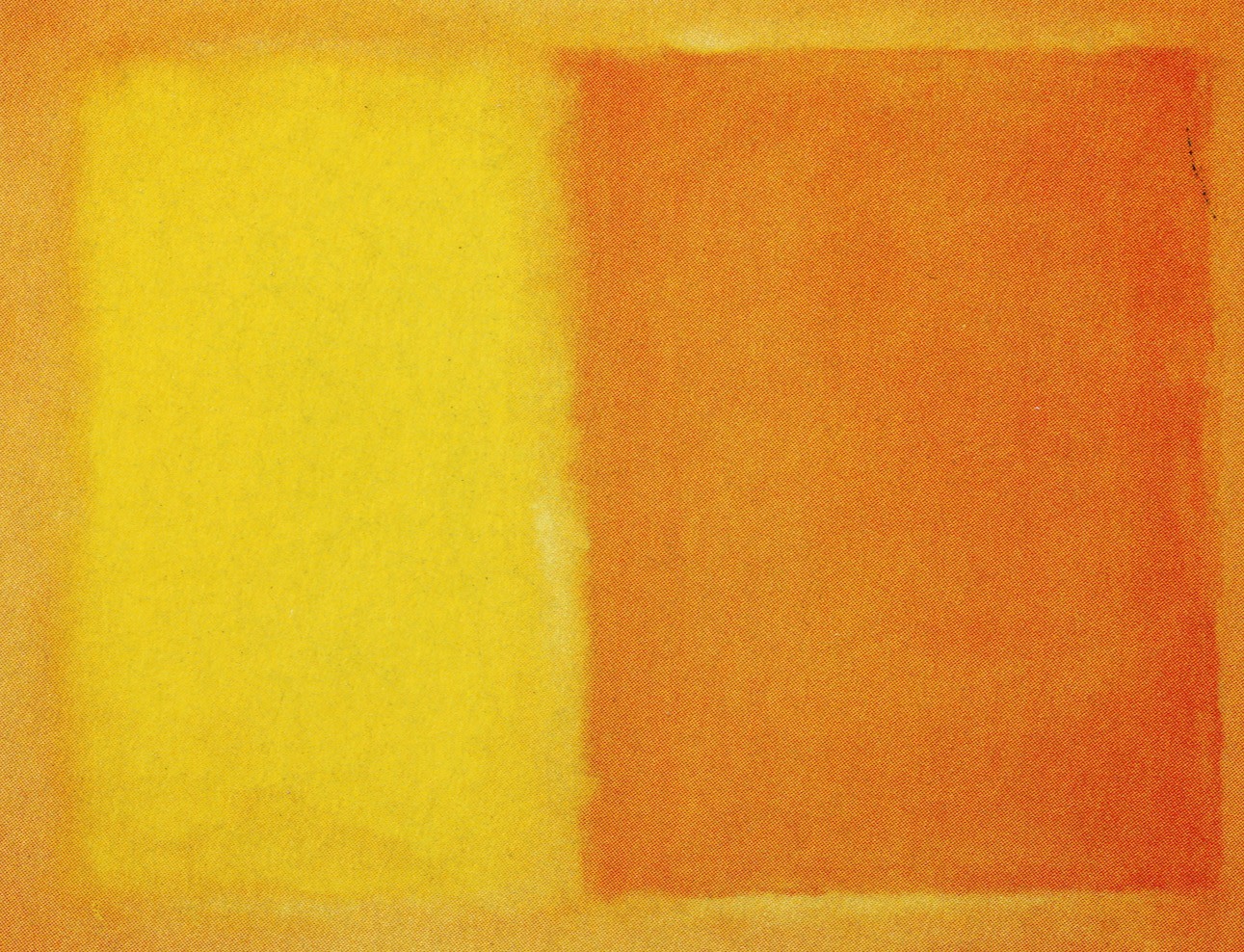
Mark Rothko, born Markus Rothkowitz, was a twentieth-century American painter, most well-known for his abstract “color field paintings,” which feature large rectangular swaths of color. Rothko’s goal was to capture the essence of basic human emotions on the canvas and then evoke those emotions from his viewers. He had a profound impact on the artistic movements of Modernism, Abstract Expressionism, and monochrome painting.
The Life of Mark Rothko
Here’s a brief biographical sketch of artist Mark Rothko:
- Early life: Mark Rothko was born Markus Rothkowitz in Dvinsk, Russia (today called Daugavpils, Latvia), in 1903, to a Jewish family. In 1913, the family immigrated to the United States and lived in Portland, Oregon. Rothko later went on to attend Yale University, though he didn’t graduate.
- Exposure to art: In 1923, Rothko moved to New York City, and after visiting a friend at The Art Students League of New York, he decided he wanted to become an artist. He studied at The Art Students League and Parsons School of Design, learning from artists such as Arshile Gorky and Max Weber. He developed friendships with many contemporary artists, including Milton Avery, Adolph Gottlieb, and Barnett Newman.
- Early success: In 1935 and 1936, Rothko and his friends exhibited paintings in galleries around New York, where the painter slowly began to receive critical attention for his surrealist paintings.
- Move to abstraction: In the 1940s, Rothko began to move away from surrealism and toward a career as an Abstract Expressionist, alongside artists such as Jackson Pollock, Piet Mondrian, and Willem de Kooning. Rothko’s transition to abstractionism was primarily due to the influence of his friend Clyfford Still, a fellow abstract painter. During this time, he began painting what critics now call his “multiform” paintings, which serve as precursors to his color field works.
- Signature style and success: In late 1949, Rothko’s paintings developed into what became known as his signature or mature style, featuring large rectangles of color. He experienced decent success in the art world, receiving several large-scale commissions for his abstract paintings, including the Four Seasons restaurant (which he famously declined after a year of work) and a chapel in Houston now called the Rothko Chapel.
- Death and legacy: On February 25, 1970, Mark Rothko died by suicide in his New York studio at the age of 66. His works live on as some of the most powerful and significant examples of modern abstract art. His work can be seen in galleries worldwide, including the Guggenheim, the National Gallery of Art, the Museum of Modern Art, and the Tate Modern.
What Are the Defining Characteristics of Mark Rothko’s Art?
Mark Rothko reached his “mature period” in 1950, and most of his contemporary art during this period shared similar characteristics. Rothko’s mature paintings all feature:
- Abstraction: Mark Rothko’s mature paintings are abstract rather than representational, meaning that the shapes on the canvas aren’t intended to represent particular objects or people. Instead, Rothko used large rectangular fields of colors to evoke specific emotional responses (like awe, ecstasy, or sorrow) from his viewers.
- Large, vertical canvases: Mark Rothko preferred to paint on large canvases (some measuring up to 15 feet high). He felt that a large canvas evoked a more visceral reaction from viewers, taking up their entire field of vision and making them feel as if they were inside the painting itself. He also preferred to paint on tall, vertical canvases rather than horizontal ones.
- Meaningful color selection: Since Mark Rothko’s work predominantly revolved around shapes and color, his choices of color were vital to each piece’s integrity. Sometimes, he chose colors that were very similar to one another—such as dark red and black—to create the illusion of the fields blending into one another. Other times, he chose colors with sharp contrast—such as orange and green—to create an “optical flicker” or “luminosity.” Much of Rothko's earlier mature works feature bright colors, like oranges, reds, yellows, and greens, while his later works feature more blacks, grays, dark reds, and browns.
6 Famous Mark Rothko Paintings
Mark Rothko generally avoided giving traditional names to his paintings, so most have gone untitled, and are categorized numerically with a simple description of the colors included on the canvas. Some of his most famous works include:
- 1. Red, Black, White on Yellow (1955): This painting is a quintessential example of the bright colors that Rothko preferred in his early mature work; it features a yellow background with rectangles of red, black, and white.
- 2. No. 16 (Red, Brown, and Black) (1957): This painting features a maroon background with three rectangles of color: one red, one brown, and one black. Rothko explained that he began to gravitate toward darker colors because they gave his paintings a sense of mystery and “atmospheric depth.”
- 3. The Four Seasons commissions (1958): In the 1950s, the Four Seasons restaurant commissioned Rothko to paint a series of works for display in their dining room. Rothko painted several paintings, becoming increasingly displeased with the idea of wealthy diners looking at his paintings as entertainment during dinner. He rebelled against this idea by painting several gloomy works, with the hopes that they would ruin the restaurant’s ambiance (including his now-famous painting Black on Maroon). He eventually declined to continue the commission and returned the advance.
- 4. Number 14 (1960): In this work, Rothko layers two rectangles—one of orange, one of dark blue—atop a dark brown background.
- 5. Orange, Red, Yellow (1961): This painting features a red background with three rectangles: two large orange ones in the middle and bottom, and a thin yellow one at the top. In 2012, this painting set a world record when it sold for $67 million at the Christie’s art auction.
- 6. Rothko Chapel paintings (1967): In the 1960s, Rothko was commissioned to paint a series of murals for a non-denominational chapel in Houston, Texas. Rothko was thrilled at the idea of his paintings being used in a meditative space. The artist completed a series of 14 dark-colored paintings for the building, including the first of his monochrome paintings.
Ready to Tap Into Your Artistic Abilities?
Grab the MasterClass Annual Membership and plumb the depths of your creativity with the help of modern artist Jeff Koons, abstract artist Futura, and stage designer Es Devlin. Our exclusive video lessons will teach you to do things like utilize color and scale, explore the beauty in everyday objects, and so much more.


Arts & Entertainment
How to Outline a Screenplay in 6 Steps: Guide to Script Outlining
Dec 8, 2021

Arts & Entertainment
Dark Blue Color Meaning: Pros, Cons of Dark Blue in Design
Aug 5, 2022

Arts & Entertainment
How to Be Creative: Activities That Boost Creative Thinking
Aug 5, 2022

Arts & Entertainment
Guide to Precisionism: 10 Notable Precisionist Artists
Jul 15, 2021

Arts & Entertainment
Guide to Impressionism: History, Characteristics, and Artists
Sep 13, 2021

Arts & Entertainment
Film 101: Understanding Film Lighting
Aug 23, 2021
Other articles
New England Clam Chowder: 4 Tips for Making Chowder
Oct 23, 2026
Claude Debussy: A Guide to Claude Debussy’s Life and Music
Jun 25, 2021
How to Play Basketball: Explore the Basics of Basketball
Jun 7, 2021
How to Write a Horror Story in 7 Steps
Dec 8, 2021
Daniel Pink’s ABC’s of Selling: Inside the 3 Key Sales Qualities
Dec 10, 2021
Wine 101: What Is Barrel Aging? Understanding the Barrel Aging Process in Winemaking and the Difference Between Steel and Oak Barrels
Sep 2, 2022