Chef Thomas Keller’s Glazed Carrots Recipe: Learn How to Glaze
Written by MasterClass
Last updated: Jan 21, 2026 • 3 min read
You eat with your eyes, after all, so gussy up your next showstopper with a glaze.

Learn From the Best
What Is Glazing?
Glazing is a coating technique that involves dipping, brushing, or sauténg a sweet or savory gloss onto dishes. You ever had a glazed donut? Of course you have! That namesake feather-soft sugary shatter is only one of the tricks glazing recipes pull off: glazes turn cakes into magic mirrors, give holiday hams a certain shiny je ne sais quoi, and lets you take vegetables into a glossy territory that is subtle step down from full-on caramelization.
History of the Glazing Cooking Technique
The glazing technique is thought to reach back to Elizabethan times, when cooks in medieval English kitchens would finish pastries with a simple glaze from egg whites and sugar.
What's the Difference Between Cake Frosting, Cake Icing, and Cake Glaze?
Frosting builds volume from a fat like butter, heavy cream, or cream cheese. Somewhere in the middle, you have basic icing, which brings in egg whites to form a stiff texture in something like royal icing. A mirror glaze on a cake, like the chocolate mirror glaze on Dominique Ansel’s chocolate cake, relies only on confectioners' sugar and a liquid—whether it be water, milk, or lemon juice—to achieve a thin, barely there coat.
What's the Difference Between a Savory and Sweet Glaze?
Glazes themselves can be sweet or savory—think brown sugar versus, say, balsamic vinegar—but they can also be used to make savory dishes more complex, rounding out the saltiness of roasted meat or enlivening the cool creaminess of a cheese like mozzarella.
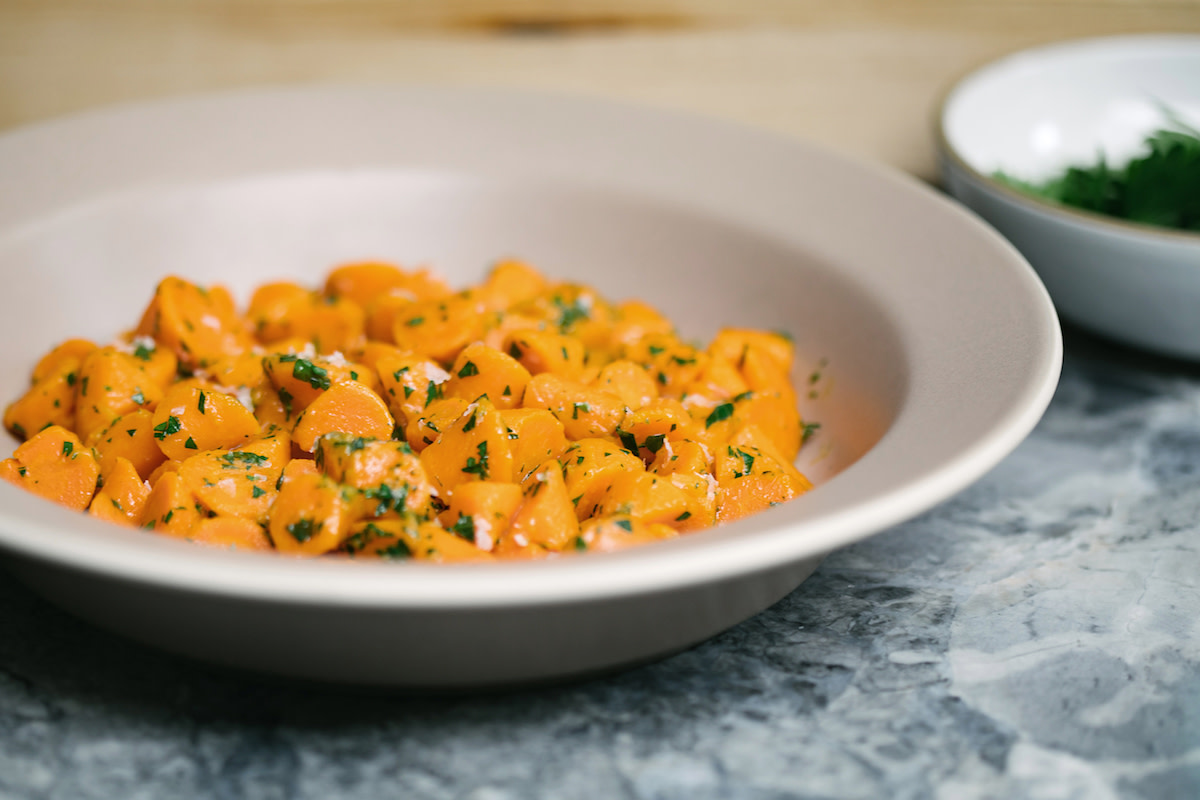
People aren't surprised by a glazed confection, as glazing exists across the vast pastry spectrum: think of French fruit glaze tarts and poached, glazed pears or a bundt cake dripping in a white chocolate glaze and the aforementioned glazed donut. But a side dish of glossy, plump carrots is bound to impress your dinner guests. Vegetables have so much of their own natural sugar—they're begging to gussied up and treated like a showstopper dessert.
2 Glazing Tips from Chef Thomas Keller:
- 1. Pay attention to aromas and sounds. The sound of the boiling water at the beginning of the process will become more intense. It will turn to a crackle as the water evaporates and the glaze reduces. When reduction is nearly complete, check for doneness. Root vegetables should have very little resistance to the tooth, without being mushy. If the vegetables are still too firm, you may add slightly more water and cook until the desired texture is achieved.
- 2. One common mistake is to let the carrots cook beyond glazing and into caramelization (unless that is your explicit intention). Luckily, it’s easy to recover the dish quickly: If you begin to see slight caramelization on the bottom of the pan or notice the sheen of the glaze disappear from the surface of the carrots, add a little water and two drops of white wine vinegar, and quickly reduce again.
Thomas Keller's Glazed Carrot Recipe
makes
Ingredients
Glazing can be a challenging technique, even for professional cooks, but practice and experience will help you achieve the perfect glaze, which is a tight and shiny emulsion. Chef Thomas Keller’s technique highlights the natural sweetness of carrots, with only a small amount of added sugar.
- 1
Add carrots to the pan in a single layer and swirl the pan around to create an even amount of space between them. Add sugar—start with about 5 grams (approximately 1 teaspoon)—and enough water to barely cover carrots. Add butter and turn on the flame to high heat. Move the pan around throughout cooking to keep carrots evenly spaced so that each is individually glazed.
- 2
Turn down the heat to medium and cook until finished. You’re looking for the butter to emulsify and the liquid to form a shiny glaze. (Cooking too much will result in oiliness. Cooking too little will leave the liquid milky-looking and watery.)
- 3
When reduction is complete, toss carrots in the pan with chopped parsley. Plate and sprinkle with a few grains of finishing salt for a little crunch.
Learn more culinary techniques in Chef Thomas Keller’s MasterClass.

Food
Wine 101: What Is Barrel Aging? Understanding the Barrel Aging Process in Winemaking and the Difference Between Steel and Oak Barrels
Sep 2, 2022

Food
Simple Syrup Recipe: How to Make Simple Syrup for Cocktails
Oct 20, 2026
Food
Almond Meal vs. Almond Flour: What’s the Difference?
Sep 7, 2021
Food
What Is DOC and DOCG Wine? Differences Between DOC, DOCG, IGT, and VdT on Italian Wine Labels
Aug 10, 2021
Food
How to Cut Shiitake Mushrooms
Mar 25, 2022
Food
How to Sharpen a Serrated Knife: Method and Tips
Jan 4, 2022
Other articles
Claude Debussy: A Guide to Claude Debussy’s Life and Music
Jun 25, 2021
How to Play Basketball: Explore the Basics of Basketball
Jun 7, 2021
How to Write a Horror Story in 7 Steps
Dec 8, 2021
Daniel Pink’s ABC’s of Selling: Inside the 3 Key Sales Qualities
Dec 10, 2021
Heavy Metal Music Guide: A Dive Into Heavy Metal Music
Jul 15, 2021
Learn the Difference Between Phrases and Clauses
Aug 11, 2021