4 Cinematography Techniques From Spike Lee’s “Do the Right Thing”
Written by MasterClass
Last updated: Nov 8, 2021 • 3 min read
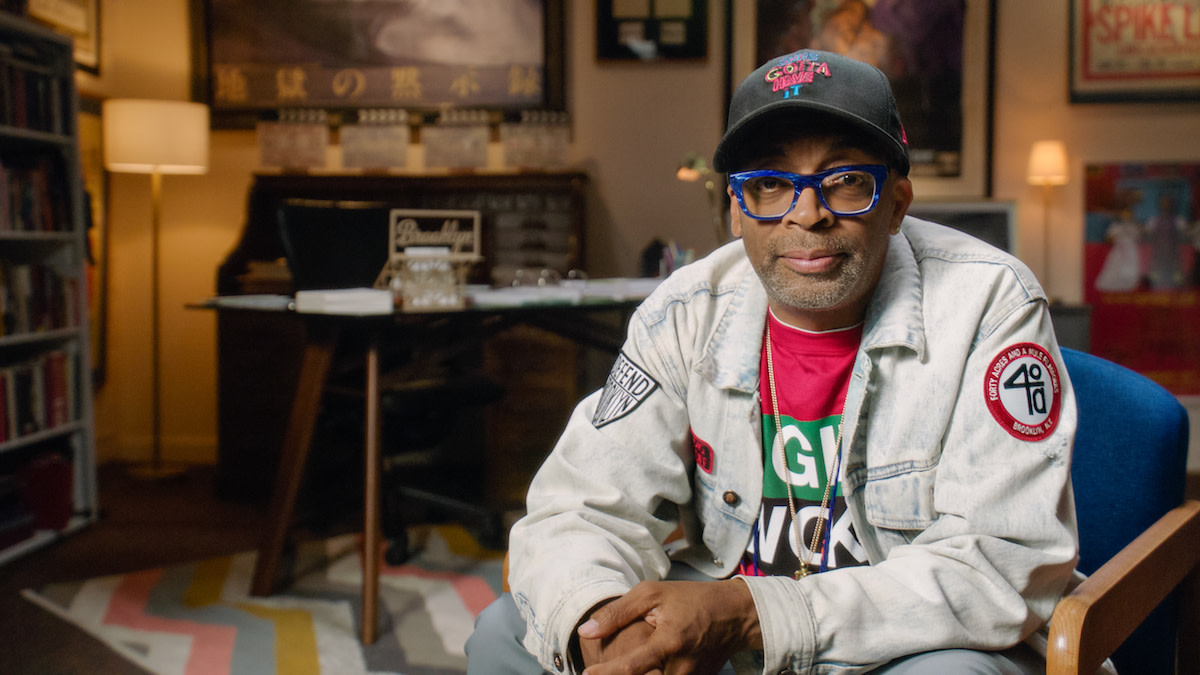
From Do the Right Thing (1989) to the Academy Award-winning BlacKkKlansman (2018), director Spike Lee has employed an array of filmmaking camera techniques, movements, and heightened performances to capture raw, emotional, and iconic scenes. Learn about the Do the Right Thing camera angles that helped establish Spike as an auteur of consequence.

Learn From the Best
A Brief Introduction to Spike Lee
Spike Lee first captivated our cultural consciousness in 1986 with his debut film, She’s Gotta Have It, a story about a sexually empowered woman in Brooklyn and her three lovers, told in black and white. Over his long and varied career, Spike has often drawn from the well of his own life, which encompass everything from historically Black colleges and universities, colorism in the Black community, culture clashes in Brooklyn, love and jazz, interracial relationships, and addiction. Spike Lee continues to make movies—and make moves: In 2010, the Library of Congress selected Malcolm X for preservation in the National Film Registry, and his most recent film is 2020’s Da 5 Bloods.
4 Cinematography Techniques From “Do the Right Thing”
Spike Lee’s film, Do the Right Thing—which received an Oscar nomination for Best Screenplay and Best Supporting Actor—utilizes different camera angles and cinematic techniques to add movement, emphasize mood, and enhance the overall visual experience of the film. Here are some of the cinematography techniques that Spike used to make the groundbreaking film:
- 1. Low camera shots: The simplest way to show contrast between characters through cinematography is the placement of the camera, and Spike Lee movies are known for their intense camera angles and movements. If you want to show a character is a little weak, you shoot them from above. If you want to show someone is powerful and controlling, you shoot them from below. This particular technique is used in Do the Right Thing, when three main characters Buggin Out, Radio Raheem, and Smiley enter Sal’s Famous Pizzeria. The camera shoots them from below, showing their confidence and power as they demand that Sal, whose New York City restaurant is in a Black neighborhood, change his “Wall of Fame” to feature famous Black people, rather than just Italian-Americans.
- 2. High camera shots: Where the low camera shot conveys power, the high camera shot conveys insecurity. In the same scene where the crew confronts Sal, Spike shoots the restaurant owner from above, highlighting his fear and insecurity of the Black men who are challenging him. Tensions come to a head when Sal destroys Radio Raheem’s boombox and spouts racial slurs at the men.
- 3. Dutch angles: A Dutch angle is a type of camera shot where the camera is tilted to one side. Also called a canted angle, oblique angle, or Dutch tilt, you can use a Dutch angle shot to take the audience out of their comfort zone, cause disorientation, and convey chaos (but be careful not to overuse it, as it can take away its impact). Spike Lee uses camera tilts throughout Do the Right Thing to convey tension and a skewed reality.
- 4. Zooms: There’s a dynamic that you get from camera movement. In Do the Right Thing, there aren’t many static shots. Characters move into the frame, away from the frame, and side to side. In one particular scene, Mookie and some other characters are emitting a string of racial epithets, and the camera zooms in close while they list off the various stereotypes about other cultures, emphasizing racial tensions. However, Samuel L. Jackson, whose character is a radio personality for the Bed-Stuy, Brooklyn area, serves as the voice of reason at this moment—he is the only character who moves towards the camera, rather than having the camera move at him. The camera symbolizes the audience in this scene, which demonstrates how the characters are directly addressing the viewers, breaking the fourth wall, and making it a more personal moment.
Learn More
Become a better filmmaker with the MasterClass Annual Membership. Gain access to exclusive video lessons taught by film masters, including Spike Lee, Mira Nair, Shonda Rhimes, Jodie Foster, David Lynch, Martin Scorsese, and more.


Arts & Entertainment
How to Outline a Screenplay in 6 Steps: Guide to Script Outlining
Dec 8, 2021

Arts & Entertainment
Dark Blue Color Meaning: Pros, Cons of Dark Blue in Design
Aug 5, 2022

Arts & Entertainment
How to Be Creative: Activities That Boost Creative Thinking
Aug 5, 2022

Arts & Entertainment
Guide to Precisionism: 10 Notable Precisionist Artists
Jul 15, 2021

Arts & Entertainment
Guide to Impressionism: History, Characteristics, and Artists
Sep 13, 2021

Arts & Entertainment
Film 101: Understanding Film Lighting
Aug 23, 2021
Other articles
Claude Debussy: A Guide to Claude Debussy’s Life and Music
Jun 25, 2021
How to Play Basketball: Explore the Basics of Basketball
Jun 7, 2021
How to Write a Horror Story in 7 Steps
Dec 8, 2021
Daniel Pink’s ABC’s of Selling: Inside the 3 Key Sales Qualities
Dec 10, 2021
Wine 101: What Is Barrel Aging? Understanding the Barrel Aging Process in Winemaking and the Difference Between Steel and Oak Barrels
Sep 2, 2022
Heavy Metal Music Guide: A Dive Into Heavy Metal Music
Jul 15, 2021