Ghost Notes Explained: How to Play Ghost Notes on Drums
Written by MasterClass
Last updated: Jun 7, 2021 • 1 min read
When composers and arrangers want to convey rhythmic information to a musician without making a specific recommendation for pitch or timbre, they often use ghost notes.

Learn From the Best
What Are Ghost Notes in Music?
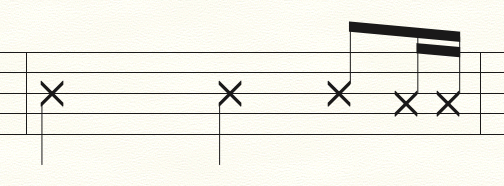
Ghost notes are a form of music notation that represents rhythmic value but not pitch or timbre. Composers notate ghost notes in sheet music using an "x" symbol. For example, ghost notes can appear in a guitarist's lead sheet or tablature, particularly when a composer calls for palm muting (from the player's picking hand) or muted strings (from their fretting hand). In drum notation, ghost notes serve a slightly different purpose: They indicate a note played softly between accented beats. Other names for ghost notes include "false notes," "dead notes," and "muted notes."
How to Notate Ghost Notes in Sheet Music
Notate ghost notes with an "x" symbol in place of a note head. Ghost notes can appear for any rhythmic duration, from whole notes to half notes to quarter notes to eighth notes to sixteenth notes and beyond. In percussion sheet music, ghost notes might also appear as a note head bracketed by parentheses.

How to Play Ghost Notes on Drums
Drummers are particularly likely to encounter ghost notes in their musical notation. Ghost notes are essentially anti-accents, so play them quietly in between accented notes. Consider these four ways to approach ghost notes on your own drum kit:
- Play the note quietly. Ghost notes are meant to be played softly. If you see a ghost note on your sheet music, it means the composer or arranger wants you to play the drum beat softer than you normally would.
- Pay special attention to hand technique. Proper performance of ghost drum beats involves hand control. Keep a low stick height over the drum head to control your volume.
- Focus on groove. You can play a full drum groove—from a steady backbeat to a funk feel full of sixteenth notes—interspersed with low-volume ghost notes. To hear an example, listen to Toto drummer Jeff Porcaro's steady feel on "Rosanna." He plays a convincing groove, and his ghost notes remain just as subtle as if he were playing single strokes.
Want to Learn More About Music?
Become a better musician with the MasterClass Annual Membership. Gain access to exclusive video lessons taught by musical masters, including Sheila E., Timbaland, Itzhak Perlman, Herbie Hancock, Tom Morello, and more.


Music
Music 101: What Is Musical Notation? Learn About The Different Types of Musical Notes and Time Signatures
Apr 27, 2019

Music
Guide to Musical Rests: 8 Types of Rests in Sheet Music
Sep 22, 2020

Music
Guide to Note Value: 5 Common Note Values in Music
Sep 22, 2020

Music
Guide to Dynamics in Music: How to Notate Changes in Volume
Aug 17, 2020

Music
Grace Note Guide: How to Play Grace Notes in Music
Aug 17, 2020

Music
How to Play Musical Trills: 3 Ways to Play Trills
Jul 14, 2020
Other articles
Guide to Triplets: How to Play and Count Triplets in Music
Sep 2, 2020
Guide to Accents in Music: How to Play 5 Types of Accents
Aug 31, 2020
Guide to Crescendos in Music: How to Play a Crescendo
Aug 31, 2020
Guide to Decrescendos in Music: How to Play a Decrescendo
Aug 31, 2020
Treble Clef and Bass Clef Guide: What Are Clefs in Music?
May 17, 2021
Guide to Polyrhythm in Music: 4 Examples of Polyrhythm
Jun 16, 2020