How to Play the Claves: Guide to Clave Rhythms
Written by MasterClass
Last updated: Nov 2, 2021 • 2 min read
If you’ve noticed the steady clicking percussion patterns of son Cubano and other forms of salsa music, you’re familiar with the sound of claves, a key instrument in a Latin percussion section.

Learn From the Best
What Are Claves?
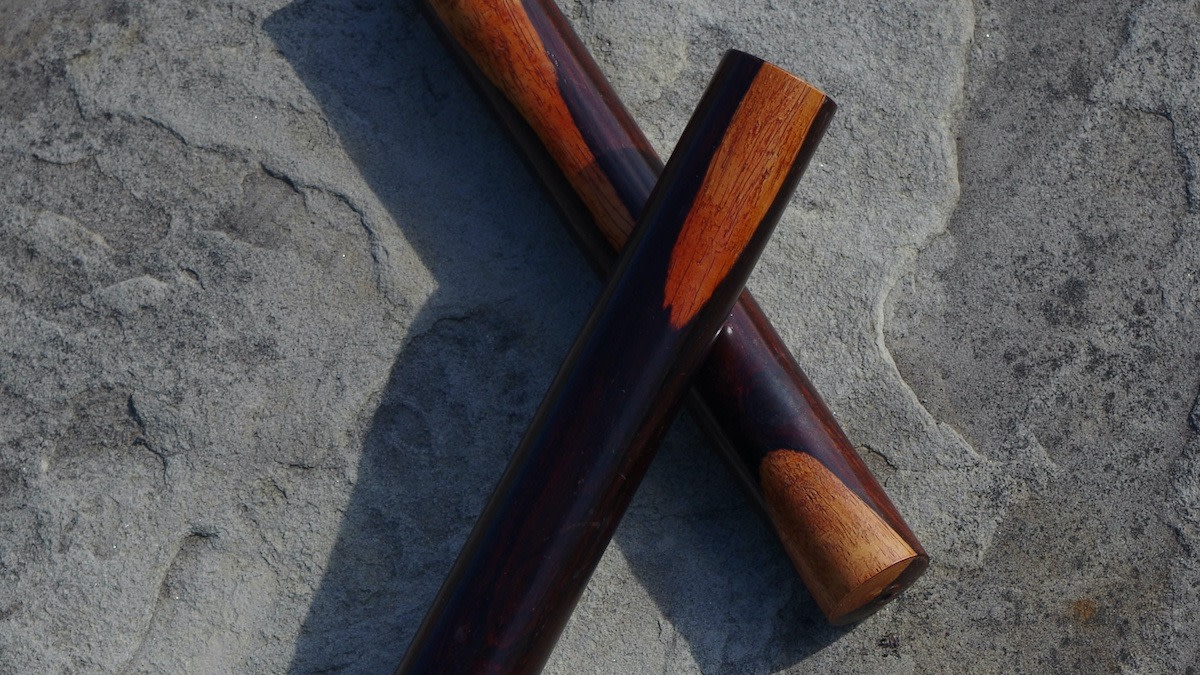
Claves are hand percussion instruments made from narrow, cylindrical hardwood sticks. Claves are idiophones—musical instruments that produce sound via the vibration of the entire instrument. Hardwood claves can be made from a variety of tonewoods, including rosewood, grenadilla, and ebony, each of which produces a subtly different tone.
Claves provide a foundational rhythmic sound to Afro-Cuban music like son Cubano, rumba, and salsa. They are also common in Brazilian music, most notably bossa nova, although Brazilian music does not use the same clave rhythms found in salsa music. Claves also have a place in American music, most notably in Latin jazz.
How to Play Claves
You can play a pair of traditional claves by grasping one in each hand and striking one against the other. Latin percussion players often call the striking clave el macho and the struck clave la hembra. Hold el macho in your dominant hand like a drumstick, and hold la hembra lightly between the thumb and fingertips of your other hand. Your grip should be firm enough to hold la hembra steady but light enough to allow some degree of resonance. Most players grasp the wood with their fingernails rather than the fleshy pads of their fingers, which allows the clave to be more resonant.
While some Afro-Cuban percussion ensembles have a dedicated clave player, many percussionists include claves as part of a larger arsenal. A clave player might double on guiro, djembe, hand clappers, wood blocks, maracas, timbales, bongos, congas, or even a standard drum set.
How to Play Clave Rhythms
Claves share their name with a rhythmic pattern that pervades son Cubano and most types of salsa music. The son clave pattern (sometimes called a "bell pattern") appears in two main forms, the 3:2 son clave and the 2:3 son clave.
The 3:2 son clave is a repeating two-measure set, where the first measure has three accented beats and the second measure has 2 accented beats. In music notation, it looks like this:


A 2:3 son clave is simply an inverted 3:2 son clave, where the first measure gets two accented beats and the second measure gets three accented beats.

Note that the clave pattern does not have to be played on a pair of claves. Drummers and percussionists articulate son clave and rumba clave patterns on bass drums, snare drums, cymbals, Cajon, cowbells, timbales, and various hand drums.
Want to Learn More About Music?
Become a better musician with the MasterClass Annual Membership. Gain access to exclusive video lessons taught by musical masters, including Sheila E., Timbaland, Itzhak Perlman, Herbie Hancock, Tom Morello, and more.


Music
Claude Debussy: A Guide to Claude Debussy’s Life and Music
Jun 25, 2021

Music
Heavy Metal Music Guide: A Dive Into Heavy Metal Music
Jul 15, 2021

Music
Learn How to Play Guitar: A Beginner’s Guide to Guitar Chords and Types
Aug 10, 2021

Music
A Brief History of Drums: On the Origin of Percussion
Jun 7, 2021

Music
Highlife Music Guide: A Brief History of Highlife Music
Oct 21, 2021

Music
Concerto Grosso Guide: Modern vs. Baroque Concerto Grosso
Aug 10, 2021
Other articles
New England Clam Chowder: 4 Tips for Making Chowder
Oct 23, 2026
How to Play Basketball: Explore the Basics of Basketball
Jun 7, 2021
How to Write a Horror Story in 7 Steps
Dec 8, 2021
Daniel Pink’s ABC’s of Selling: Inside the 3 Key Sales Qualities
Dec 10, 2021
Wine 101: What Is Barrel Aging? Understanding the Barrel Aging Process in Winemaking and the Difference Between Steel and Oak Barrels
Sep 2, 2022
Learn the Difference Between Phrases and Clauses
Aug 11, 2021