How to Play the Djembe: A Beginner’s Guide to Djembe Drums
Written by MasterClass
Last updated: Jun 7, 2021 • 3 min read
The djembe is a West African drum and an important percussion instrument around the world.

Learn From the Best
What Is a Djembe?
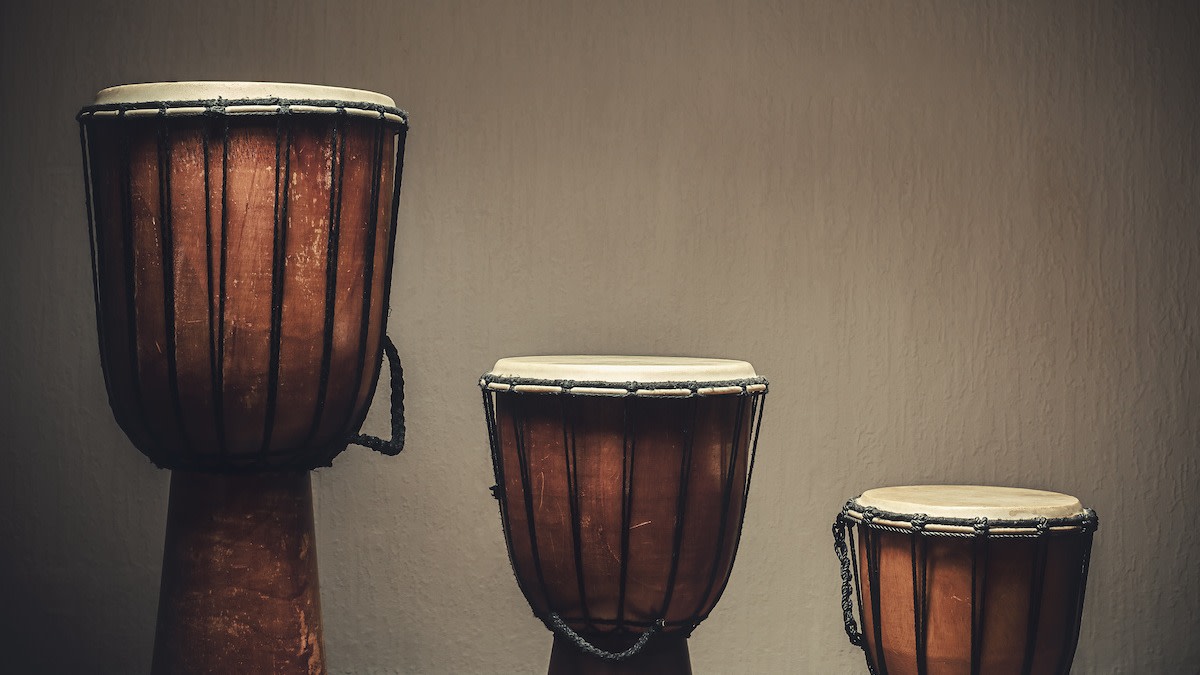
A djembe (pronounced "JEM-bae") is an African hand drum. Djembes are rope-turned and have goblet-shaped bodies with rawhide drumheads. The African djembe is a staple in world percussion, and many Western and non-Western countries have their own version of the djembe. Djembes range in size, but an average-sized djembe weighs approximately 15 to 20 pounds. Djembe players are called “djembefola.”
The Origins of the Djembe
The djembe is integral to the culture and history of West Africa, dating back to at least the twelfth century. While there are few historical records of the instrument, the djembe is believed to have originated in the Malian empire, which stretched through modern-day Guinea, Mali, Gambia, Ivory Coast, Ghana, and Senegal.
How Are Djembes Made?
A traditional djembe is a musical instrument made of hardwood, most notably African mahogany. A drum maker carves a wood djembe drum shell using hand tools. They then polish the exterior until smooth, leaving the interior with a rough texture to improve sound. A traditional drum is completed with a goat skin head, though other rawhides or synthetic materials have become popular. Rope-tuned djembes are fitted with ropes—usually synthetic and made of kernmantle or polyester—that serve to tighten the drum head.
How to Play the Djembe: 3 Fundamental Tones
There are three ways to strike the head in djembe drumming: slap, bass, and tone.
- 1. Slap: Slap sounds make the highest-pitched sounds on the djembe. Hit the edge of the drum with a slight curvature in your fingers.
- 2. Bass: Bass sounds are the lowest pitches on the djembe. Hit the center of the drum with a heavy, flat palm.
- 3. Tone: Tone sounds are medium-pitched. Hit the edge of the drum slightly more toward the center than you would for a slap. Keep your fingers flat, and move your whole arm, rather than just your wrist.
Once you understand the fundamentals of each stroke, you can begin practicing. The most common playing position is to sit with the drum between your legs. Grab a chair or stool, and sit on the front edge. Place the djembe in between your legs to keep it secure. Do not lean into the djembe—instead, recline back slightly. You can use a djembe strap to loop the drum over your shoulder if you want to move around while playing.
5 Tips for Playing the Djembe
The djembe sounds radically different from a snare or bass drum, but all percussionists should follow the same basic practice structure and learn to play in a way that complements a band.
- 1. Practice daily. Practice is the only way to master any instrument. If your time is limited, aim for at least one hour of practice every morning or evening.
- 2. Do your homework. Daily practice is essential. However, to expand on that, be sure you know how to play different types of rhythms, genres, and styles. Doing so will not only open up your creativity but prepare you for a wide range of collaboration opportunities. It’ll also increase what you bring to the table during a session, or even a drum circle once you feel ready.
- 3. Learn different rudiments. A rudiment is any of a series of basic patterns that can later be combined to create a more complex pattern. Rudiments will help you maintain proper technique more efficiently and intelligently. Beginners use rudiments to improve their speed and control, and pros use them to stay sharp. Common djembe rhythms include the paradiddle, passport, kuku, and kassa.
- 4. Keep time. The drummer drives the rhythm of the song and, hence, the entire band. If you get excited and speed up or get lazy and slow down, the band has to follow. The most important thing you can do is learn to maintain a steady tempo.
- 5. Break it down. Dynamics refer to the volume of the performance, which is dictated by how hard or soft you hit your djembe. Just as important as these is breaking it down.
Want to Learn More About Music?
Become a better musician with the MasterClass Annual Membership. Gain access to exclusive video lessons taught by musical masters, including Itzhak Perlman, Herbie Hancock, Tom Morello, Timbaland, and more.


Music
Claude Debussy: A Guide to Claude Debussy’s Life and Music
Jun 25, 2021

Music
Heavy Metal Music Guide: A Dive Into Heavy Metal Music
Jul 15, 2021

Music
Learn How to Play Guitar: A Beginner’s Guide to Guitar Chords and Types
Aug 10, 2021

Music
A Brief History of Drums: On the Origin of Percussion
Jun 7, 2021

Music
Highlife Music Guide: A Brief History of Highlife Music
Oct 21, 2021

Music
Concerto Grosso Guide: Modern vs. Baroque Concerto Grosso
Aug 10, 2021
Other articles
How to Play Basketball: Explore the Basics of Basketball
Jun 7, 2021
How to Write a Horror Story in 7 Steps
Dec 8, 2021
Daniel Pink’s ABC’s of Selling: Inside the 3 Key Sales Qualities
Dec 10, 2021
Wine 101: What Is Barrel Aging? Understanding the Barrel Aging Process in Winemaking and the Difference Between Steel and Oak Barrels
Sep 2, 2022
Learn the Difference Between Phrases and Clauses
Aug 11, 2021
Simple Syrup Recipe: How to Make Simple Syrup for Cocktails
Sep 6, 2026