Cheese is one of life’s greatest pleasures. The key to prolonging your favorite cheese’s lifespan is storing it properly. Read on to learn how to store cheese at home.

Learn From the Best
What Is Cheese?
Cheese is a fermented dairy product with a wide array of flavors, textures, and colors, depending on the source of milk (cow, goat, sheep, or buffalo) and the cheesemaking process.
Cheesemakers categorize cheeses based on many factors, including moisture content, fat content, milk source, age, texture, length of fermentation, production method, and country or region of origin. Although no universal standard exists for categorizing cheeses, one of the most common methods is to group kinds of cheese by their level of firmness, ranging from soft to hard.
How Long Does Cheese Last When Properly Stored?
How long cheese will last depends on the type of cheese and how you store it. Removed from its original packaging and stored properly, hard cheese will typically last three to four weeks. Soft cheeses have a shorter shelf life, usually about seven days after opening.
Regardless of the type of cheese, always consult your cheesemonger about what to expect, and trust your senses. Most cheese has a funky smell, and some cheeses even sport colorful molds. If your cheese takes on unpleasant new odors or colors, it’s probably best to discard it.
How to Store Cheese
Here are some fool-proof cheese storage tips:
- 1. Remove the cheese from the original packaging. Grocery stores tend to sell cheese in vacuum-sealed packages. Although convenient for shipping, these packages can suffocate the cheese and promote spoilage.
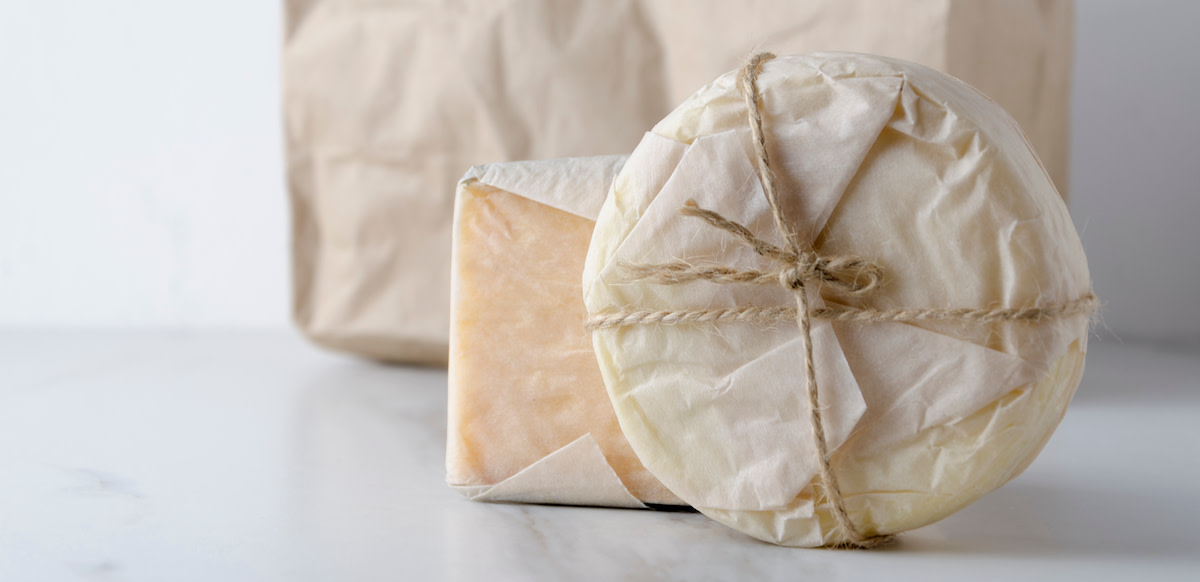
- 2. Wrap the cheese in cheese paper. Instead of plastic wrap, use formaticum (a.k.a. cheese wrap or cheese paper) to store your cheese. Formaticum is a breathable wrapper ideal for storing hard, semihard, and semisoft cheeses and is what most cheese shops and deli counters use to wrap cheese. Next to formaticum, parchment paper or wax paper will suffice. Some cheese lovers prefer a double-wrap method and will wrap once in cheese paper and again in aluminum foil. This method keeps the flavors from pungent cheeses, like blue cheese, from spreading to other foods.
- 3. Store fresh cheeses in their original liquid. Store soft, fresh cheeses, such as ricotta or mozzarella, in their original liquid in an airtight container.
- 4. Place in a storage container. After wrapping up your cheese, place it in an airtight container or a resealable plastic bag.
- 5. Refrigerate. If your refrigerator has a crisper or cheese drawer, use it. Otherwise, keep cheese in an airtight container on a shelf in your refrigerator. Use cheese as soon as possible. Hard cheeses typically last three to four weeks in the fridge, while you should use soft cheese within a couple of days of opening.
Want to Learn More About Cooking?
Become a better chef with the MasterClass Annual Membership. Gain access to exclusive video lessons taught by the world’s best, including Gordon Ramsay, Gabriela Cámara, Chef Thomas Keller, Dominique Ansel, Yotam Ottolenghi, Alice Waters, and more.

Food
Wine 101: What Is Barrel Aging? Understanding the Barrel Aging Process in Winemaking and the Difference Between Steel and Oak Barrels
Sep 2, 2022

Food
Simple Syrup Recipe: How to Make Simple Syrup for Cocktails
Sep 6, 2026
Food
Almond Meal vs. Almond Flour: What’s the Difference?
Sep 7, 2021

Food
What Is DOC and DOCG Wine? Differences Between DOC, DOCG, IGT, and VdT on Italian Wine Labels
Aug 10, 2021
Food
How to Cut Shiitake Mushrooms
Mar 25, 2022

Food
How to Sharpen a Serrated Knife: Method and Tips
Jan 4, 2022
Other articles
Claude Debussy: A Guide to Claude Debussy’s Life and Music
Jun 25, 2021
How to Play Basketball: Explore the Basics of Basketball
Jun 7, 2021
How to Write a Horror Story in 7 Steps
Dec 8, 2021
Daniel Pink’s ABC’s of Selling: Inside the 3 Key Sales Qualities
Dec 10, 2021
Heavy Metal Music Guide: A Dive Into Heavy Metal Music
Jul 15, 2021
Learn the Difference Between Phrases and Clauses
Aug 11, 2021