Learn About BEAM: The Expandable Module Developed for Space Exploration
Written by MasterClass
Last updated: Sep 29, 2021 • 2 min read
The International Space Station (ISS) serves as a collaborative orbiting laboratory for international space agencies to conduct experiments and develop technologies that may one day assist in deep space exploration or human missions to Mars.
One technology developed for the ISS is an expandable module known as the Bigelow Expandable Activity Module (BEAM).

Learn From the Best
What Is BEAM?
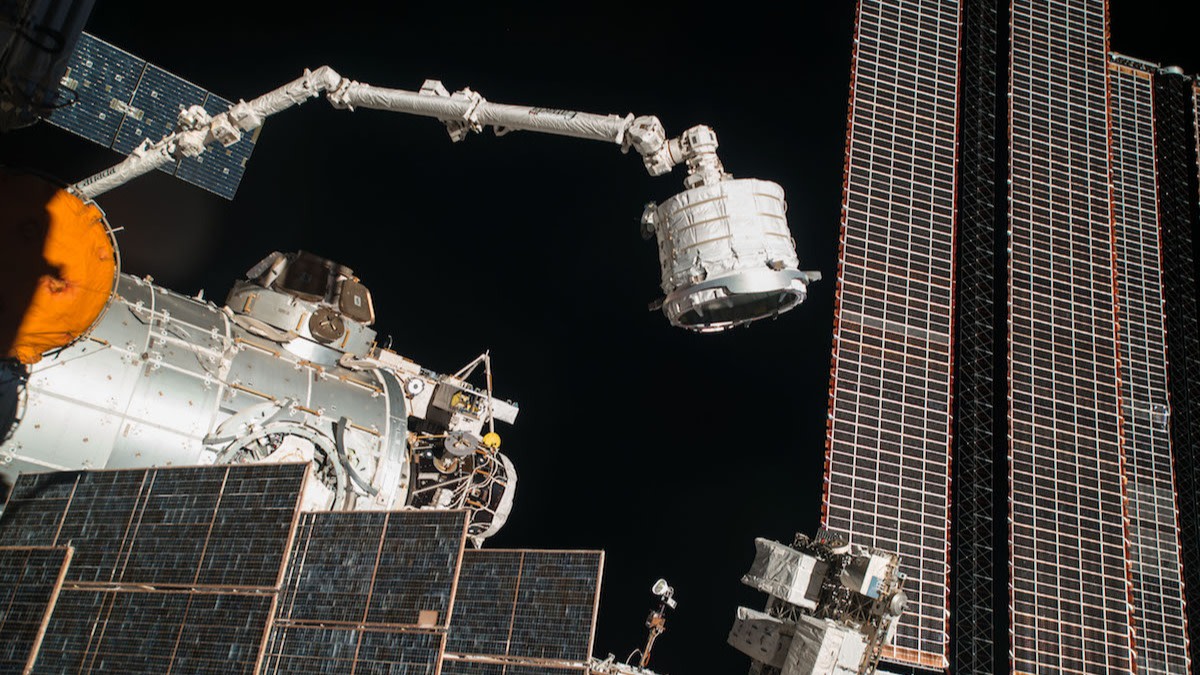
The Bigelow Expandable Activity Module is an ISS capsule made from fabric that is able to be launched into space in a compact form and expanded with air once attached to the space station.
BEAM was developed by NASA and built by the private, Nevada-based company Bigelow Aerospace. BEAM was launched into space by the private company SpaceX. It was built and attached to the ISS as a test of expandable modules and is used to collect valuable data on radiation shielding in space and to record the impact of space debris and small asteroids on the module itself. Currently, BEAM is being used to store cargo transfer bags that are moved to and from cargo spacecraft.
What Does BEAM Do?
The BEAM was designed as part of a series of technology demonstrations to test space habitat systems outside of the Earth’s atmosphere.
BEAM was initially designed to be used for a two-year period to showcase the structural integrity and thermal stability of habitat technology that could go on to be used by NASA astronauts traveling to deep space. The technology developed for BEAM has many applications beyond its current usage and could be used onboard a hypothetical commercial space station in addition to further space exploration on the part of NASA.
How Was BEAM Developed?
The notion of developing an inflatable habitat has been considered by NASA since the 1960s.
- The first attempt at creating expandable habitats took shape with the TransHab inflatable module project, which was developed in the 1990s but was terminated by Congress in 2000.
- NASA then sold several patents related to expandable habitat technology to Bigelow Aerospace, an aerospace company located in Las Vegas, NV.
- The Bigelow Space Operations (BSO) divisions set about designing private space station habitat systems that could viably house crew members in low-earth orbit.
- The first two prototypes to come out of this effort were known as Genesis I and Genesis II, both of which were launched by BSO to earth orbit.
- NASA’s interest in developing an expandable space habitat and inflatable module grew in the early 2010s.
- In 2012, NASA awarded BSO a contract to begin construction on the BEAM module modeled after their earlier prototypes.
The BEAM module was transported to the ISS aboard the SpaceX CRS-8 spacecraft. The module was attached to the ISS on the aft portion of the existing Tranquility module by Canadarm 2. After a 10 month delay, the inflatable space habitat was inflated to full capacity over the course of seven hours.
Want to Learn More About Space Exploration?
Whether you’re a budding astronautical engineer or simply want to become more informed about the science of space travel, learning about the rich and detailed history of human space flight is essential to understanding how space exploration has advanced. In Chris Hadfield’s MasterClass on space exploration, the former commander of the International Space Station provides invaluable insight into what it takes to explore space and what the future holds for humans in the final frontier. Chris also talks about the science of space travel, life as an astronaut, and how flying in space will forever change the way you think about living on Earth.
Want to learn more about space exploration? The MasterClass Annual Membership provides exclusive video lessons from master scientists and astronauts like Chris Hadfield.


Science & Tech
Correlation Explained: What Is Correlation in Statistics?
Mar 21, 2022

Science & Tech
Food Sustainability: Supporting Sustainable Farming Practices
Mar 3, 2022

Science & Tech
Frequency Distribution: What Is a Frequency Distribution?
Mar 10, 2022

Science & Tech
What Is Salyut 1? Learn About the History and Impact of the World’s First Space Station
Sep 29, 2021

Science & Tech
What Is a Spacewalk? Learn Why Astronauts Perform Spacewalks and How Astronauts Train for Spacewalks
Sep 29, 2021

Science & Tech
Understanding Nature Conservation: 6 Conservation Methods
Jun 7, 2021
Other articles
Claude Debussy: A Guide to Claude Debussy’s Life and Music
Jun 25, 2021
How to Play Basketball: Explore the Basics of Basketball
Jun 7, 2021
How to Write a Horror Story in 7 Steps
Dec 8, 2021
Daniel Pink’s ABC’s of Selling: Inside the 3 Key Sales Qualities
Dec 10, 2021
Wine 101: What Is Barrel Aging? Understanding the Barrel Aging Process in Winemaking and the Difference Between Steel and Oak Barrels
Sep 2, 2022
Heavy Metal Music Guide: A Dive Into Heavy Metal Music
Jul 15, 2021