Guide to Realism: 5 Famous Realist Artists and Artworks
Written by MasterClass
Last updated: Jun 7, 2021 • 4 min read
Realism is an art movement established in nineteenth-century France by such painters as Gustave Coubert, Jean-François Millet, and Honoré Daumier. The movement emphasized precise attention to the natural, gritty details of working-class life.

Learn From the Best
What Is Realism in Art?
Realism was an art movement in the nineteenth century during which artists sought to depict everyday subjects and ordinary people with great attention to realistic and natural detail. Realism was born out of Romanticism, an intellectual and artistic movement that dominated Western art in the eighteenth century. Romantic Era artists produced highly-detailed paintings that typically focused on the emotion of a scene. Realism aimed to use the same detailed painting techniques to elevate working-class figures and to show everyday life.
Early realists painted scenes from the world around them: farmers, laborers, barnyard animals, and country roads were depicted as they looked and acted in real life. Artists like Honoré Daumier added social commentary to their work by focusing on the social and economic divisions between the upper and lower classes.
A Brief History of Realism in Art
Art history points to mid-nineteenth-century France as the realist movement’s birthplace and Gustave Courbet as its first practitioner. Here is a brief historical overview of realism:
- Courbet lays the groundwork. Courbet’s large-scale still-life canvases depicted laborers and other working-class figures in everyday activities, but with the same scope and sweep as religious paintings from the Romantic movement. Courbet encouraged other artists to take a similar approach to their work, and paintings by Jean-François Millet, Rosa Bonheur, and Édouard Manet all helped to shift the emphasis in painting from Romanticism to realism.
- Realism goes international. The impact of realism spread beyond France’s borders to artists in other parts of the globe, especially the United States. Artists Winslow Homer and Thomas Eakins were among the chief proponents of American realism during the nineteenth century. Edward Hopper’s unsentimental and quietly impactful paintings and the highly detailed reproductions of life in New York’s most impoverished neighborhoods by Ashcan School artists carry on the realist tradition in the twentieth century. In addition to the American realist movement, realism flourished in the paintings of Ilya Repin, who was widely considered one of Ukraine's most influential artists.
- Realism influences other artistic movements. In addition to influencing artists, realism was linked to the development of impressionism in France during the 1860s. Like realism, impressionism and its proponents—Claude Monet, John Constable, Jean-Baptiste-Camille Corot—sought to capture moments taken from everyday life, focusing on interpretation rather than exact detail. You can find the tenets of realism in such twentieth-century art movements as photorealism and hyperrealism, which employ photography and mechanical means to create even more detailed and exact reproductions of scenes from everyday life.
5 Famous Realist Artists and Artworks
Several nineteenth-century French artists helped to establish the ground rules for realism with their paintings. Among the significant figures and artworks in the movement were:
- 1. Gustave Courbet: A dislike for the grand opulence of Romanticism led Courbet to focus his large-scale works on laborers and other working-class people, and in turn, helped to establish the groundwork for the realism movement. His painting The Stone Breakers (1849–50) featured laborers with their faces turned away from the viewer, toiling in dirty clothes to create gravel for a road, while A Burial at Ornans (1849–50) depicted a simple funeral scene without any of the reverence or religion of Romanticism.
- 2. Jean-François Millet: Millet replicated working-class life in his work. His 1848 painting The Winnower depicts a laborer with the same stature and artistry for grander subjects in Romanticism and High art. The Gleaners focuses on the physical skill required by three women working in a wheat field. In addition to helping establish the realist movement, Millet was a co-founder of the Barbizon School, a group of painters who sought to depict the simple beauty of the landscape around the eponymous French village.
- 3. Honoré Daumier: Daumier was a printmaker and painter whose caricatures captured the social, political, and economic differences between the city’s upper and lower classes, and drew attention to the difficult conditions under which many French citizens lived. The French painter’s work could be brutally frank: His 1834 work Rue Transnonain, le 15 Avril 1834, showed the aftermath of a riot in Paris, in which government troops discharged their weapons on innocent bystanders while in pursuit of a suspect. Daumier’s work would influence an offshoot of realist art called social realism, which flourished in the United States in the nineteenth and twentieth centuries.
- 4. Rosa Bonheur: One of the most accomplished female realist painters of the nineteenth century, Bonheur’s images of animals found the rough-hewn beauty of life in France’s fields and farms. Her 1848 work Ploughing in the Nivernais rendered a team of oxen as majestic creatures and won first prize at the French Salon that year.
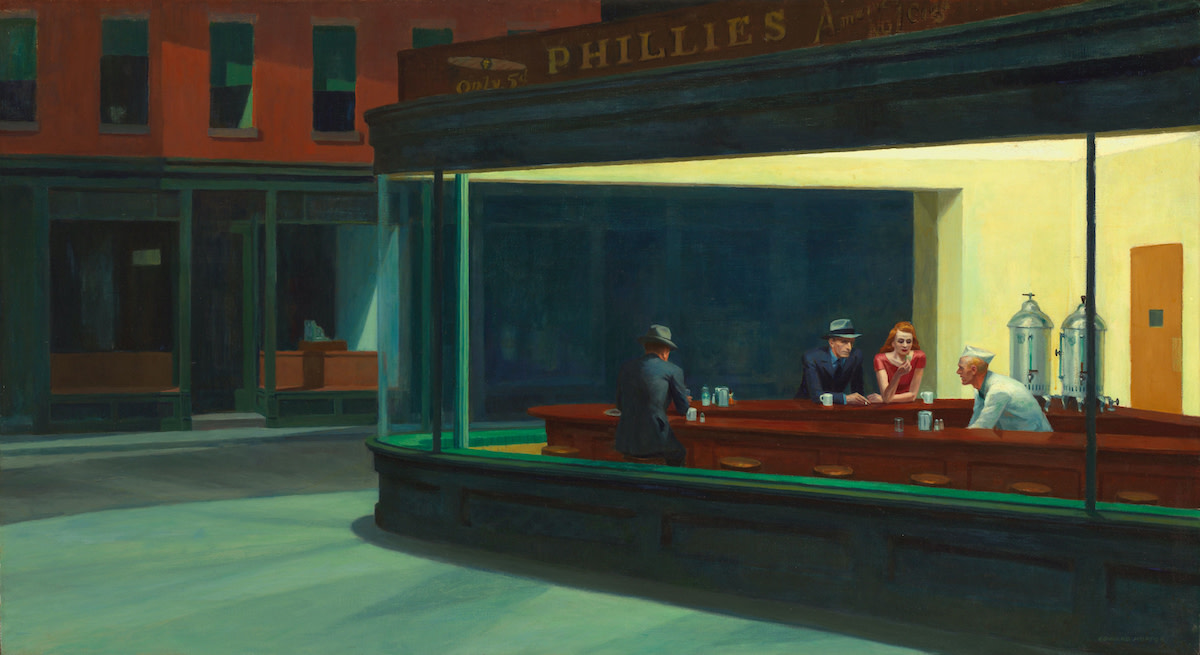
- 5. Edward Hopper: Arguably the most famous figure in American realism, Hopper’s paintings emphasized stillness, detachment, and distance. His 1942 painting Nighthawks, which spies on the patrons and staff at a late-night diner, is among the most recognized American art paintings.
Ready to Tap Into Your Artistic Abilities?
Grab the MasterClass Annual Membership and plumb the depths of your creativity with the help of modern artist Jeff Koons, abstract artist Futura, and stage designer Es Devlin. Our exclusive video lessons will teach you to do things like utilize color and scale, explore the beauty in everyday objects, and so much more.


Arts & Entertainment
How to Outline a Screenplay in 6 Steps: Guide to Script Outlining
Dec 8, 2021

Arts & Entertainment
Dark Blue Color Meaning: Pros, Cons of Dark Blue in Design
Aug 5, 2022

Arts & Entertainment
How to Be Creative: Activities That Boost Creative Thinking
Aug 5, 2022

Arts & Entertainment
Guide to Precisionism: 10 Notable Precisionist Artists
Jul 15, 2021

Arts & Entertainment
Guide to Impressionism: History, Characteristics, and Artists
Sep 13, 2021

Arts & Entertainment
Film 101: Understanding Film Lighting
Aug 23, 2021
Other articles
New England Clam Chowder: 4 Tips for Making Chowder
Oct 23, 2026
Claude Debussy: A Guide to Claude Debussy’s Life and Music
Jun 25, 2021
How to Play Basketball: Explore the Basics of Basketball
Jun 7, 2021
How to Write a Horror Story in 7 Steps
Dec 8, 2021
Daniel Pink’s ABC’s of Selling: Inside the 3 Key Sales Qualities
Dec 10, 2021
Wine 101: What Is Barrel Aging? Understanding the Barrel Aging Process in Winemaking and the Difference Between Steel and Oak Barrels
Sep 2, 2022