What Is Unrefined Salt? 3 Uses for Unrefined Salt
Written by MasterClass
Last updated: Feb 4, 2022 • 3 min read
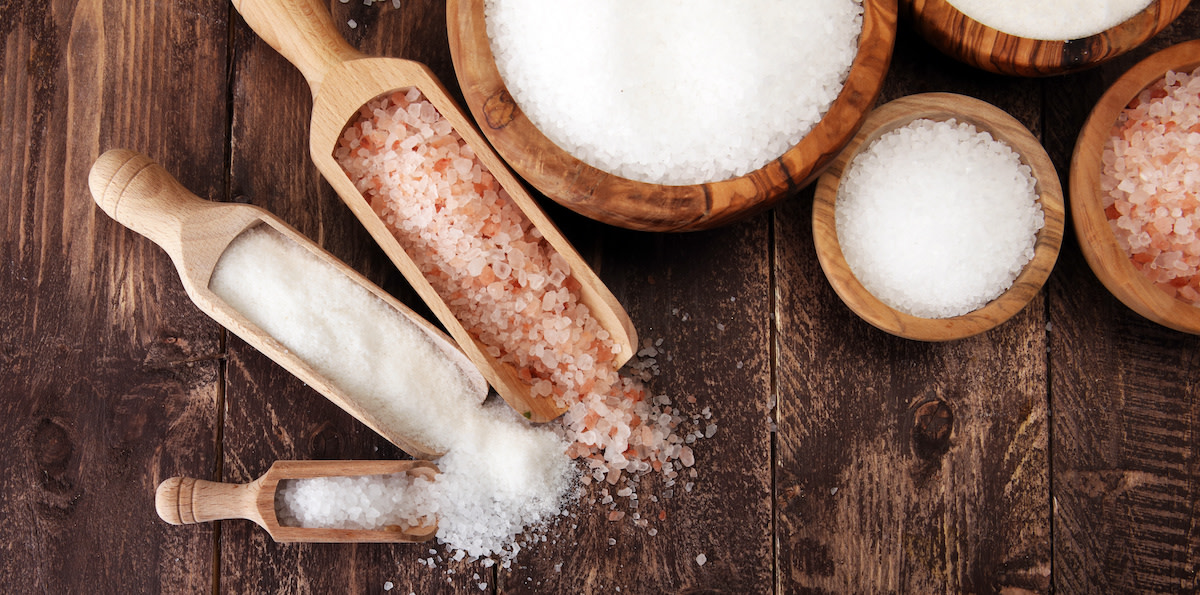
Unrefined salt is a type of whole food packed with essential nutrients and minerals. Across the globe, there are salt deposits in underground mines and ocean water filled with unrefined salt. Learn about the sourcing process of unrefined salt and how it differs from its refined counterpart.

Learn From the Best
What Is Unrefined Salt?
Unrefined salt is natural, unprocessed salt (or sodium chloride) extracted from natural sources. Unlike refined salt, unrefined salt contains all of its original trace minerals (including magnesium, iron, potassium, calcium, copper, zinc, and phosphorus) but doesn’t feature any additives or preservatives.
The three types of unrefined salt include Himalayan salt, Real salt, and sea salt, each of which has a different origin. Sea salt involves evaporating seawater to extract its natural salt. Himalayan salt and Real Salt come from deep-shaft salt mines located below the Earth’s surface.
Unrefined vs. Refined Salt: How Do They Compare?
Unrefined and refined salt are both sodium chloride derived from one of two sources (the sea or deep-shaft salt mines). Here is a quick breakdown of some of the differences between refined and unrefined salt.
- Mineral content: Unrefined rock salt contains all of the trace minerals from its natural source, including magnesium, iron, potassium, calcium, copper, zinc, and phosphorus. The salt carries many of the health benefits associated with these nutrients, which are essential for balancing your body’s electrolytes and supporting overall immune health. The refining process required to produce refined salt typically removes these nutrients.
- Production process: The main difference between refined salt and unrefined salt is the chemical refining process, which the former involves. Producers harvest, grind, and package unrefined salt straight from the natural source, which is either a deep-shaft salt mine or the ocean.
- Harvesting: Specialty natural salts like Celtic sea salt and Real Salt have unique natural harvesting processes. Harvesters extract Celtic sea salts from the shores of France using traditional Celtic methods. Redmond Real Salt is natural sea salt from an ancient sea in Redmond, Utah, and this type of unrefined salt contains sixty trace minerals. Conversely, refined salt undergoes a chemical process to remove impurities to create “pure” salt that is almost solely sodium chloride (NaCl). This process involves salt feeding, salt washing, dosing of additives and coating, salt drying, and sizing. Producers also add anti-caking agents and conditioning agents (such as silicate, iodizing agents, and refined sugars, such as dextrose) to the refined salt to lengthen its shelf life and stabilize the chemical composition.
- Texture: During the refining process, producers grind refined salt into a fine-grain texture. (Unless it has anti-caking agents, this type of salt is likely to clump together.) Unrefined salt has a coarse texture, similar to its original crystallized state, due to its minimal processing. Producers grind some types of unrefined salt (like pink Himalayan salt) to be finer than their original texture.
- Taste: Unrefined salt has a more complex flavor profile than pure salt due to its high mineral content. Refined salt has a more pure salt flavor.
3 Uses of Unrefined Salt
Here are just some of the uses of unrefined salt.
- 1. Culinary seasoning: Unrefined salt is a food-grade substance that you can use as a culinary seasoning. Colorful pink Himalayan sea salt also makes a beautiful garnish to sprinkle on top of desserts like chocolate chip cookies and caramels. Consider adding a ring of unrefined salt to the rim of your Margarita.
- 2. Curing meats: Curing is a meat preservation technique that involves rubbing a piece of meat with salt to remove excess moisture and prepare it for long-term storage. Pink curing salt, a mix of table salt and sodium nitrate, is a standard curing salt that butchers use to dry a variety of meats. However, you can also use sea salt to dry and cure meats. Learn how to cure meats.
- 3. Mouth rinses: Unrefined salt helps promote oral health because the salt balances the pH levels in the mouth and prevents the growth of bacteria. Treat a sore throat or canker sore with a salt rinse, or gargle with a saltwater solution on a regular basis to promote oral hygiene.
Want to Learn More About Cooking?
Become a better chef with the MasterClass Annual Membership. Gain access to exclusive video lessons taught by the world’s best, including Gordon Ramsay, Gabriela Cámara, Chef Thomas Keller, Dominique Ansel, Yotam Ottolenghi, Alice Waters, and more.


Food
New England Clam Chowder: 4 Tips for Making Chowder
Oct 23, 2026
Food
Wine 101: What Is Barrel Aging? Understanding the Barrel Aging Process in Winemaking and the Difference Between Steel and Oak Barrels
Sep 2, 2022

Food
Simple Syrup Recipe: How to Make Simple Syrup for Cocktails
Oct 20, 2026
Food
Almond Meal vs. Almond Flour: What’s the Difference?
Sep 7, 2021

Food
What Is DOC and DOCG Wine? Differences Between DOC, DOCG, IGT, and VdT on Italian Wine Labels
Aug 10, 2021
Food
How to Cut Shiitake Mushrooms
Mar 25, 2022
Other articles
Claude Debussy: A Guide to Claude Debussy’s Life and Music
Jun 25, 2021
How to Play Basketball: Explore the Basics of Basketball
Jun 7, 2021
How to Write a Horror Story in 7 Steps
Dec 8, 2021
Daniel Pink’s ABC’s of Selling: Inside the 3 Key Sales Qualities
Dec 10, 2021
Heavy Metal Music Guide: A Dive Into Heavy Metal Music
Jul 15, 2021
Learn the Difference Between Phrases and Clauses
Aug 11, 2021