White Meat vs. Dark Meat Chicken: What’s the Real Difference?
Written by MasterClass
Last updated: Sep 3, 2021 • 6 min read
White meat has a reputation for being the healthiest, best part of the chicken: Skinless chicken breast meat is the most popular and expensive cut of chicken you can buy. But when it comes time to carve up a whole roasted bird, everyone starts to fight over the juicy thighs. So what’s the difference between white and dark meat, really?


Learn From the Best
What’s in Chicken Meat?
Chicken meat is made up of two basic types of muscle fibers: white fibers, which are used for short, quick movements, and red fibers, which are used for prolonged movements, such as standing. White muscle fibers rapidly convert carbohydrates from within the fibers themselves into energy, whereas red muscle fibers are fueled by fat—some of which comes from within the fibers, and some of which comes from the bloodstream. Red muscle fibers get their color from the proteins that help convert this fat into energy, such as myoglobin, which is purple and full of iron. Because they contain fat and proteins, red fibers are more flavorful than white. Most muscles aren’t simply red or white—they contain a combination of both types of fibers.
What Is the Difference Between White Meat and Dark Meat?
When it comes to chickens, we refer to muscles containing mostly white fibers as white meat, and muscles containing more red fibers as dark meat.
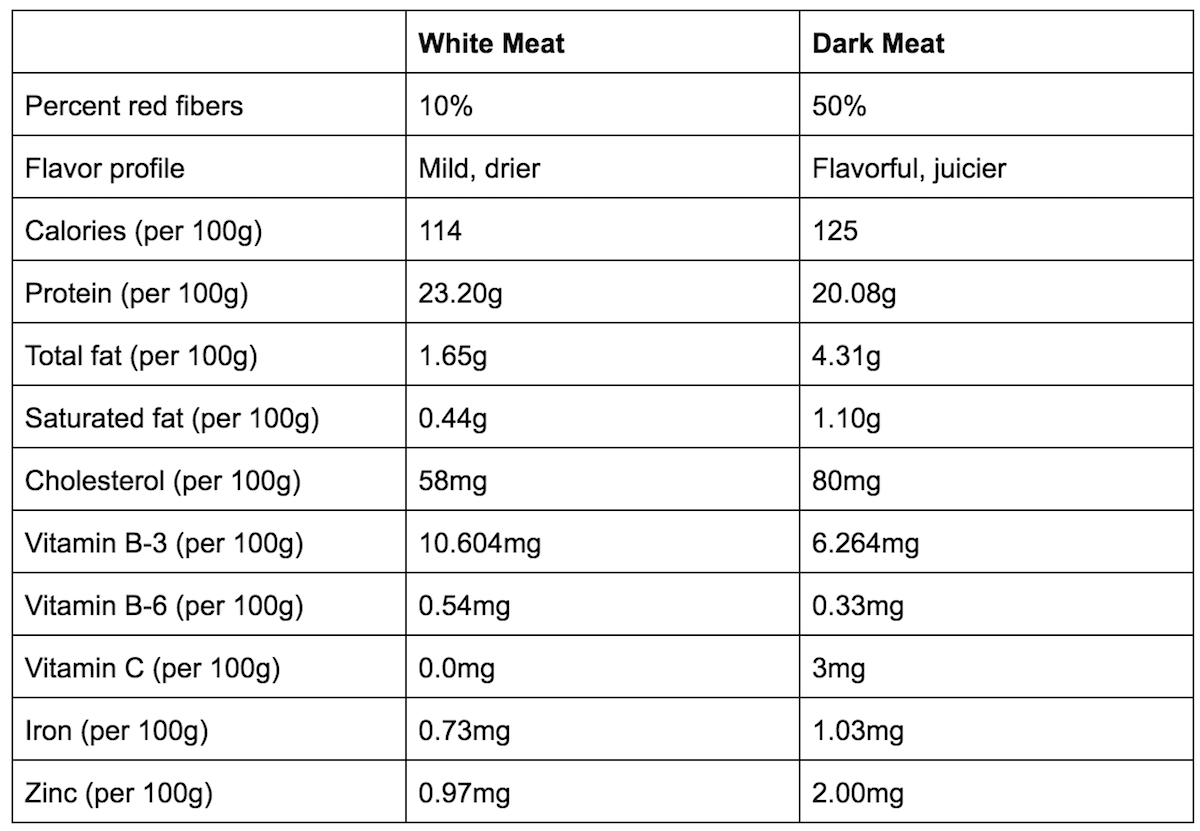
- White meat, found in the breasts and wings, contains about 10% red fibers. This part of the chicken is lean and mild in flavor, and dries out easily if overcooked.
- Dark meat chicken contains around 50% red fibers and is found in chicken legs, which are more flavorful and juicy, and can be cooked longer.
- Light meat contains slightly fewer calories than dark meat, which has a higher fat content—almost 3 extra grams of fat per 100 grams of meat, according to the USDA Nutrient Database—and more than twice the amount of saturated fat.
- White meat has a little more protein than dark, and while dark meat contains higher levels of zinc, iron, and vitamin C, white meat has more B vitamins, specifically niacin (vitamin B-3) and pyridoxine (vitamin B-6).
- Whether your meat is light or dark isn’t the only thing that will affect chicken flavor and cook time: If you leave the skin on, you’ll add fat (and flavor!). Bones slow down cooking as well.
The bottom line? While white meat might be a better choice for those following a low-fat, heart-healthy diet, eating a variety of both white and dark meat—such as from a whole chicken—will ensure you’re getting the full range of flavors and nutrients that chicken has to offer. An easy way to remember the flavor differences between light and dark chicken meat is that light meat tastes light—it’s milder in flavor, whereas dark meat is fattier and tastes more chicken-y.

Which Part of the Chicken Is White Meat?
Chicken breasts and wings are considered white meat.
What Are the Best Methods for Cooking White Meat?
8 Recipe Ideas for White Meat chicken
- 1. Chicken Suprême with Root Vegetables
- 2. Easy Lemon Chicken Piccata
- 3. Chef Thomas Keller's Chicken Paillard
- 4. Classic Chicken Vindaloo
- 5. Baked chicken drumsticks with fish sauce glaze
- 6. Grilled chicken drumsticks with cilantro and lime
- 7. Baked buffalo chicken wings
- 8. Dry-rubbed roasted chicken wings
Which Part of the Chicken Is Dark Meat?
Chicken thighs and drumsticks are considered dark meat.
What Are the Best Methods for Cooking Dark Meat?
Roasting, braising, frying are great options for fattier dark meat. The advantage of dark meat is that it’s almost impossible to overcook—the muscles are tougher and need a longer cooking time to tenderize, and the extra fat melts when exposed to heat, keeping dark chicken meat juicy.
5 Recipes Ideas for Dark Meat Chicken
- 1. Classic Chicken Vindaloo
- 2. Buttermilk fried chicken legs
- 3. Chicken Adobo
- 4. Braised chicken legs with garlic
- 5. Crispy chicken thighs
Find more culinary uses for chicken in Chef Thomas Keller’s MasterClass.
What’s in Chicken Meat?
Chicken meat is made up of two basic types of muscle fibers: white fibers, which are used for short, quick movements, and red fibers, which are used for prolonged movements, such as standing. White muscle fibers rapidly convert carbohydrates from within the fibers themselves into energy, whereas red muscle fibers are fueled by fat—some of which comes from within the fibers, and some of which comes from the bloodstream. Red muscle fibers get their color from the proteins that help convert this fat into energy, such as myoglobin, which is purple and full of iron. Because they contain fat and proteins, red fibers are more flavorful than white. Most muscles aren’t simply red or white—they contain a combination of both types of fibers.
What Is the Difference Between White Meat and Dark Meat?
When it comes to chickens, we refer to muscles containing mostly white fibers as white meat, and muscles containing more red fibers as dark meat.
- White meat, found in the breasts and wings, contains about 10% red fibers. This part of the chicken is lean and mild in flavor, and dries out easily if overcooked.
- Dark meat chicken contains around 50% red fibers and is found in chicken legs, which are more flavorful and juicy, and can be cooked longer.
- Light meat contains slightly fewer calories than dark meat, which has a higher fat content—almost 3 extra grams of fat per 100 grams of meat, according to the USDA Nutrient Database—and more than twice the amount of saturated fat.
- White meat has a little more protein than dark, and while dark meat contains higher levels of zinc, iron, and vitamin C, white meat has more B vitamins, specifically niacin (vitamin B-3) and pyridoxine (vitamin B-6).
- Whether your meat is light or dark isn’t the only thing that will affect chicken flavor and cook time: If you leave the skin on, you’ll add fat (and flavor!). Bones slow down cooking as well.
The bottom line? While white meat might be a better choice for those following a low-fat, heart-healthy diet, eating a variety of both white and dark meat—such as from a whole chicken—will ensure you’re getting the full range of flavors and nutrients that chicken has to offer. An easy way to remember the flavor differences between light and dark chicken meat is that light meat tastes light—it’s milder in flavor, whereas dark meat is fattier and tastes more chicken-y.
Which Part of the Chicken Is White Meat?
Chicken breasts and wings are considered white meat.
What Are the Best Methods for Cooking White Meat?
8 Recipe Ideas for White Meat chicken
- 1. Chicken Suprême with Root Vegetables
- 2. Easy Lemon Chicken Piccata
- 3. Chef Thomas Keller's Chicken Paillard
- 4. Classic Chicken Vindaloo
- 5. Baked chicken drumsticks with fish sauce glaze
- 6. Grilled chicken drumsticks with cilantro and lime
- 7. Baked buffalo chicken wings
- 8. Dry-rubbed roasted chicken wings
Which Part of the Chicken Is Dark Meat?
Chicken thighs and drumsticks are considered dark meat.
What Are the Best Methods for Cooking Dark Meat?
Roasting, braising, frying are great options for fattier dark meat. The advantage of dark meat is that it’s almost impossible to overcook—the muscles are tougher and need a longer cooking time to tenderize, and the extra fat melts when exposed to heat, keeping dark chicken meat juicy.
5 Recipes Ideas for Dark Meat Chicken
- 1. Classic Chicken Vindaloo
- 2. Buttermilk fried chicken legs
- 3. Chicken Adobo
- 4. Braised chicken legs with garlic
- 5. Crispy chicken thighs
Find more culinary uses for chicken in Chef Thomas Keller’s MasterClass.


Food
Wine 101: What Is Barrel Aging? Understanding the Barrel Aging Process in Winemaking and the Difference Between Steel and Oak Barrels
Sep 2, 2022

Food
Simple Syrup Recipe: How to Make Simple Syrup for Cocktails
Sep 6, 2026
Food
Almond Meal vs. Almond Flour: What’s the Difference?
Sep 7, 2021

Food
What Is DOC and DOCG Wine? Differences Between DOC, DOCG, IGT, and VdT on Italian Wine Labels
Aug 10, 2021

Food
How to Cut Shiitake Mushrooms
Mar 25, 2022

Food
How to Sharpen a Serrated Knife: Method and Tips
Jan 4, 2022
Other articles
Claude Debussy: A Guide to Claude Debussy’s Life and Music
Jun 25, 2021
How to Play Basketball: Explore the Basics of Basketball
Jun 7, 2021
How to Write a Horror Story in 7 Steps
Dec 8, 2021
Daniel Pink’s ABC’s of Selling: Inside the 3 Key Sales Qualities
Dec 10, 2021
Heavy Metal Music Guide: A Dive Into Heavy Metal Music
Jul 15, 2021
Learn the Difference Between Phrases and Clauses
Aug 11, 2021